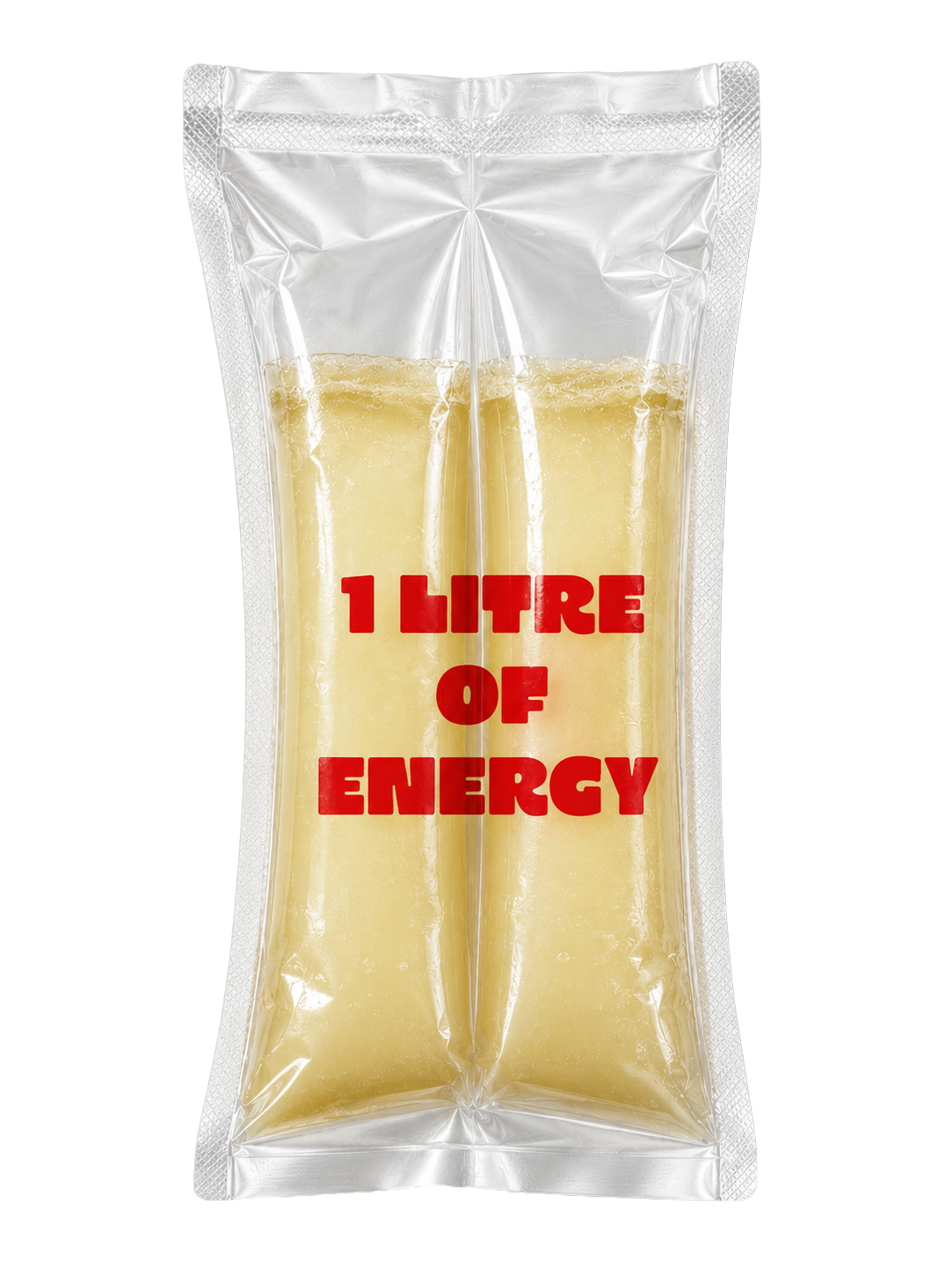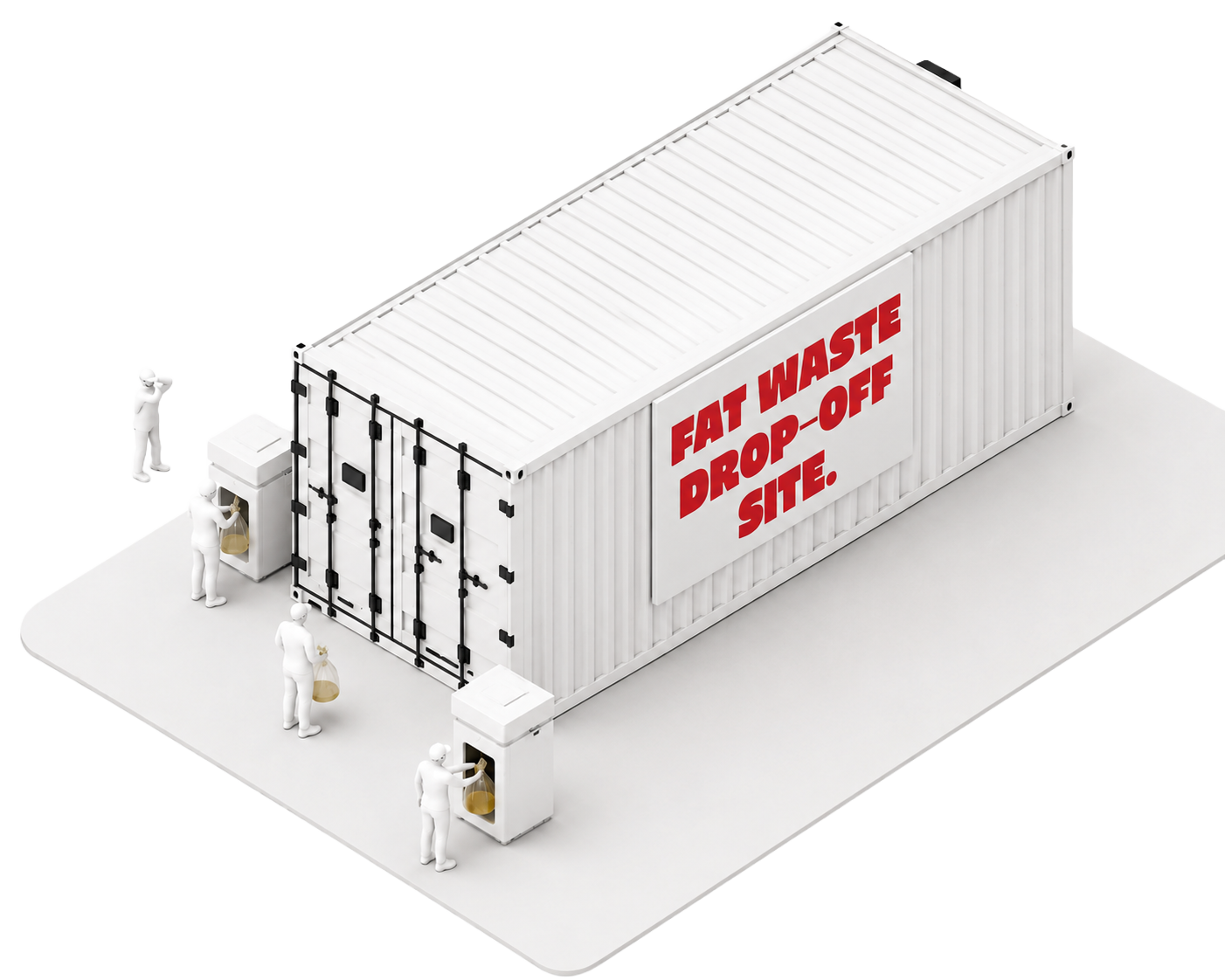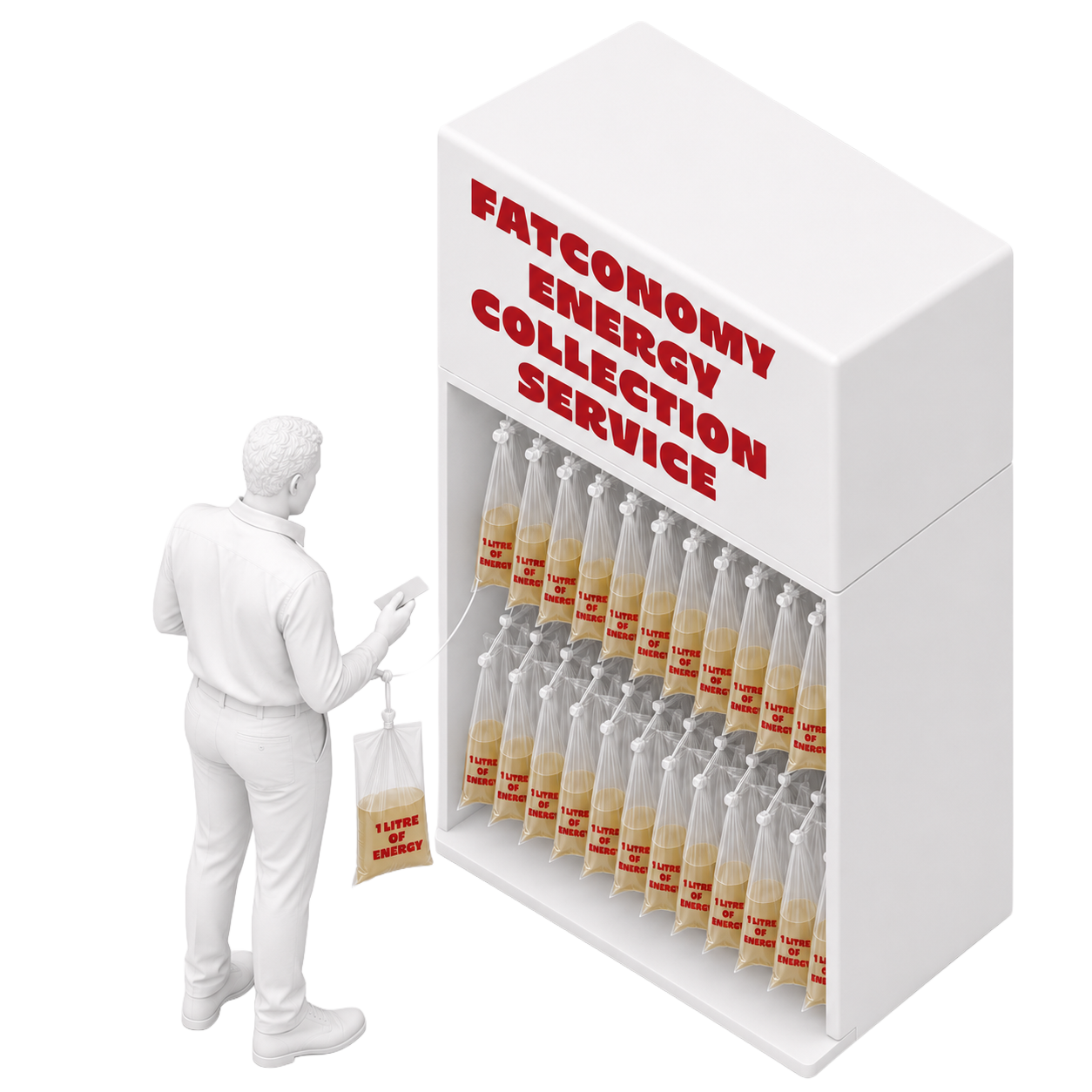
Fatconomy is a service-design and innovation campaign for the UK's waste-fat economy, all in service of a circular future. We map the system, work with the people inside it, prototype design-led scenarios and tools, and run immersive campaigns to shift policy, education and behaviour around waste.
Explore the fatconomy world below.

Fatconomy is a public-facing campaign and service-design practice working with biofuel refiners, sanitation utilities, regulators and educators to make the waste-fat economy legible, defensible and investable. Four modes of engagement, scoped to your programme.
Films, interactive maps and campaign assets that make invisible waste systems legible to a public, press and policy audience, translating technical material flows into stories that can be shared, cited and funded.
For: biofuel producers, utilities, awarding bodies, sustainability comms teams. Outputs: short films, animated explainers, microsites (this one), social cuts, press kits.
Facilitated workshop programmes that turn factory floors, classrooms and community halls into temporary labs for the circular fat economy, co-designing future products, services and policy briefs with operators, students and the public.
For: CSR and innovation leads, education partners, local authorities, regulators. Outputs: scenario decks, futures-thinking artefacts, co-designed prototypes, policy-ready scripts and presentations.
Research-led narrative strategy that turns technical evidence (fraud, imports, regulation, byproducts) into public-facing stories and policy-grade arguments. We work alongside your technical teams, then write the story your audience will actually read.
For: trade bodies, sustainability councils, biofuel producers, foundations. Outputs: evidence briefs, public reports, exhibition essays, board-ready strategy decks.
Commissioned and partner-led campaigns across industry, sanitation and education, from documentary film to on-site workshops to student co-design programmes.
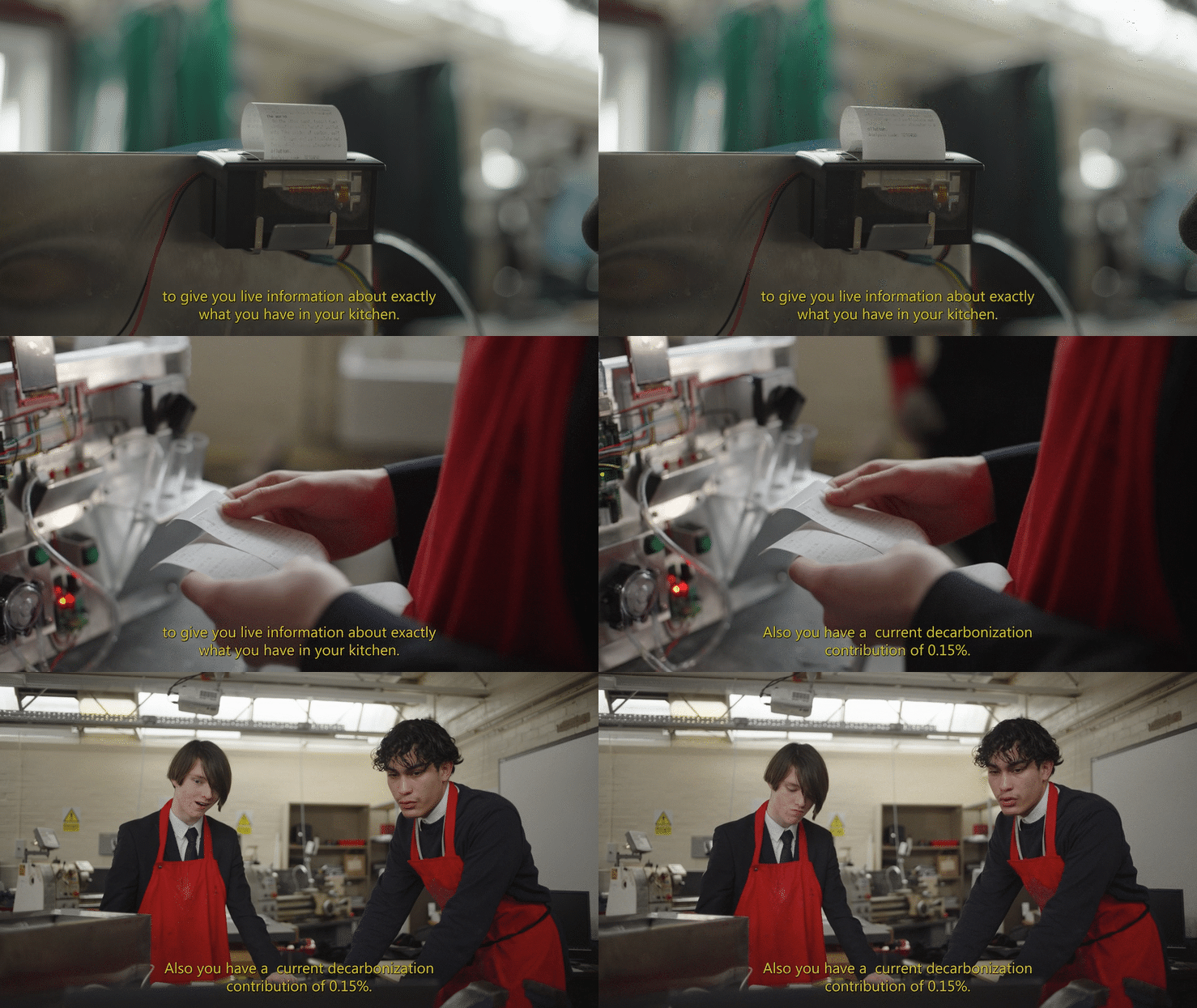
A documentary and policy campaign with EcoClarity's FOG Recovery Hub (live at Yorkshire Water, Hull), translating a patented 98%-concentration FOG separator into a public-facing story about fatbergs, biodiesel and water-utility decarbonisation.
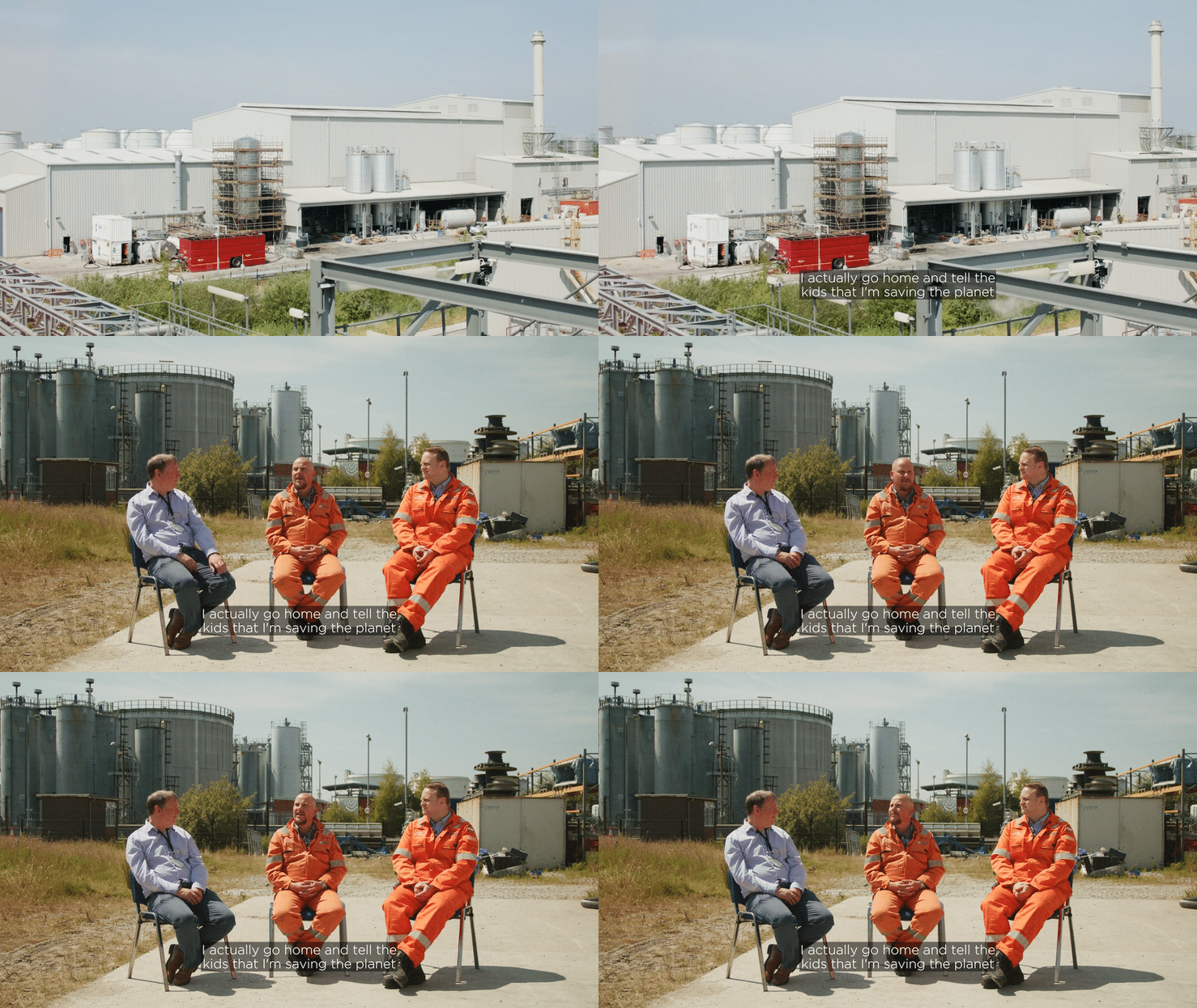
On-site at the UK's largest UCO-to-biodiesel refiner. A worker-led portrait campaign and series of co-design workshops with crews refining used cooking oil into road-grade B100.
A week-long sixth-form residency turning industry feedstock data into a student-led public campaign. Sixteen-year-olds prototyped Victorian-era fat traps, staged speculative futures and ran their own waste-literacy programme.
A growing archive of short films, photo essays and reports from each zone of the Fat Map: workshops, factory tours, community labs and prototype studios. Filter by zone, click a tile to play.
Half a million tonnes of fats, oils and greases leave UK kitchens every year. A growing share is fuelling the country's road transport. The rest is fraud, fatbergs and lost value.
We partner with biofuel producers, sanitation utilities, regulators, foundations and education bodies to design campaigns, tools and research that move the waste-fat economy forward. Brief us on something specific, or open a conversation about a future programme.
Studio Ficta is a London-based service-design practice founded by Robert Charles Johnson, working at the intersection of public infrastructure, sustainability and popular culture. The studio was originated as a 2019 Design Museum Designers in Residence project (theme: Cosmic) and is supported by a Design Fellowship from the Royal Commission for the Exhibition of 1851.
Fatconomy is the studio's long-running campaign on the waste-fat economy, building films, tools, workshops and policy briefs with industry partners including Argent Energy, EcoClarity, the Design Museum and Cooper Union.